The road to zero emissions isn’t a single highway, it’s a network of smaller roads, built one improvement at a time.

Trucking has always been about problem-solving. Move more freight, burn less fuel, get there faster, stay safe doing it. But the next frontier isn’t just about speed or distance, it’s about sustainability.

The Industry’s Evolution

Every shipment has a footprint. From the steel that builds trucks to the fuel that drives them, transportation sits at the crossroads of economy and environment. Trucks move over 70% of America’s freight, which makes them essential, but also responsible for a large share of emissions from transport.

The industry has been steadily evolving: cleaner engines, better aerodynamics, lightweight materials, and data-driven efficiency tools. And more fleets are looking beyond regulations to adopt sustainable practices voluntarily, because clean operations often mean smart operations.

Efficiency as a Strategy

Lowering emissions isn’t just about compliance. It’s also about cost, competition, and culture. Fuel is one of a fleet’s largest expenses; anything that cuts consumption boosts the bottom line. Reducing idle time, optimizing loads, and improving routing are just as critical as new technology.

Meanwhile, public awareness is shifting. Shippers and retailers now evaluate logistics partners not only on cost and speed but on carbon impact. The fleets that demonstrate sustainability earn stronger reputations and deeper contracts.

Progress in Motion

The road to zero won’t happen overnight. But every small step, every gallon saved, every route optimized, every cleaner truck deployed, pushes the entire industry forward.

Trucking has always adapted to change. This time, the destination isn’t just a delivery point. It’s a cleaner, smarter future for the road itself.

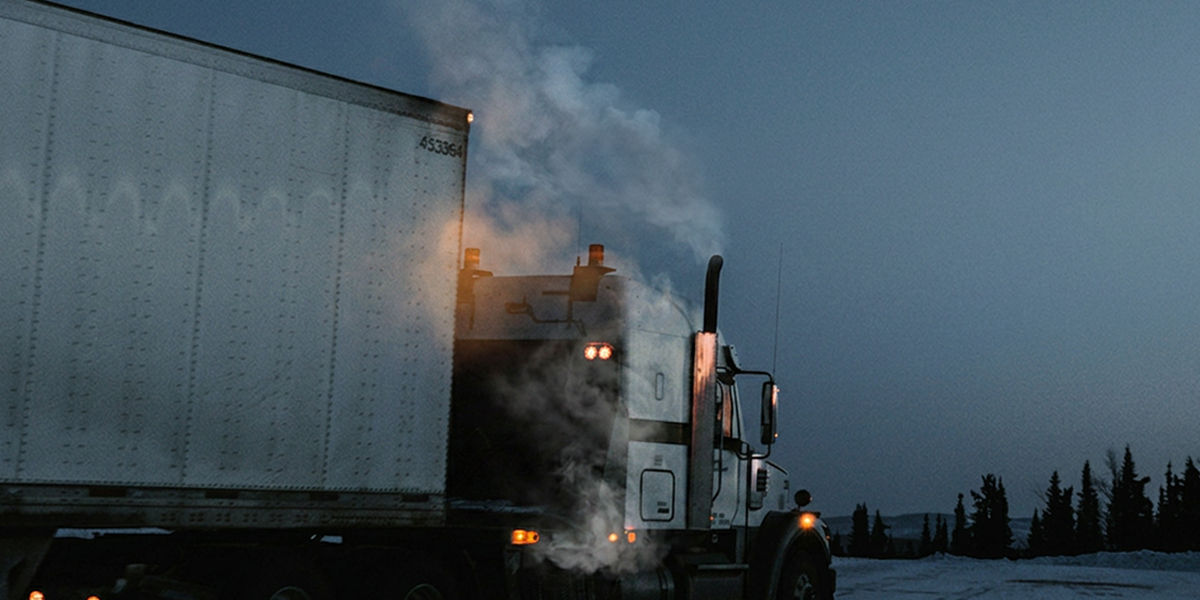
Every trucker knows the sound, that low, steady rumble that never quite goes away. It fills rest areas at midnight, hums outside diners at dawn, and echoes across the country’s freight network every single day.

That sound is idling and it costs more than most realize.

Each year, long-haul trucks in the U.S. burn over 8 billion gallons of diesel while standing still. That’s billions in fuel, millions in maintenance, and countless hours of wear spent powering lights, air conditioning, and comfort through the night.

The Cost of Stillness

To keep the cab warm in Montana or cool in Texas, the engine runs. It’s reliable. It’s what drivers have always done. But the price of comfort adds up, in dollars, in emissions, and in strain on equipment.

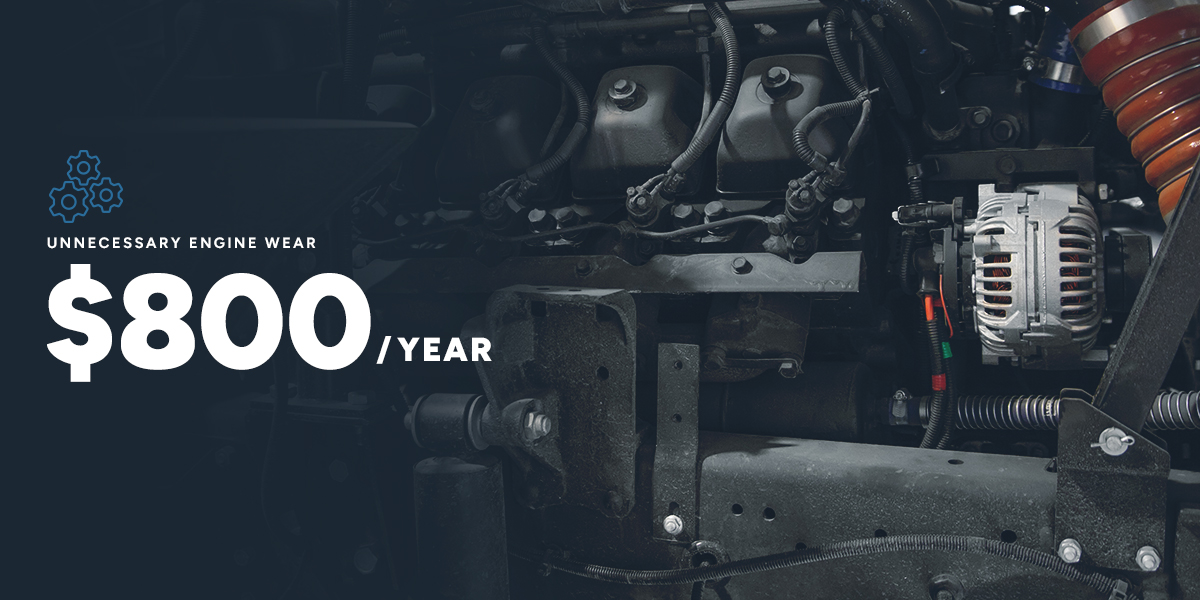
Idling consumes close to a gallon of fuel per hour. Over a year, that’s thousands of dollars for a single truck; multiplied across fleets, the numbers become staggering. And yet, it’s not just a financial issue. Prolonged idling means more maintenance, shorter engine life, and higher emissions in every state where freight moves.

A Quiet Shift

Across the industry, new approaches are emerging. Fleets and drivers are experimenting with smarter rest strategies, automatic shutoff systems, and more efficient energy management. Some companies track idle hours as carefully as miles. Others reward drivers for finding ways to rest smarter, not longer.

It’s part of a broader cultural shift, one that views efficiency not just as movement, but as mindfulness. The most successful drivers and fleets are those that recognize value even in stillness: in planning routes, in managing downtime, in saving energy wherever possible.

Because in modern trucking, productivity isn’t only measured in miles. It’s measured in how well we manage the moments between them.

Every day, millions of trucks roll through the arteries of America, unseen by most and essential to all. They carry the food we eat, the medicine we need, the fuel that powers our homes, and the materials that build our cities. Take them off the road for a single day and the nation would feel it instantly. Gas stations would run dry, hospitals would ration supplies, and grocery shelves would empty. The economy does not just depend on trucking. It runs on it.

From the outside, it is easy to see only the final mile when a package appears at a doorstep or a shipment reaches a store. Inside the industry, everyone knows that is just the closing scene of a much longer story. Before a single pallet reaches its destination, trucks have already touched it several times, hauling raw materials to factories, components to assembly plants, and finished goods to distribution centers. Every link in that chain is tied together by wheels and diesel.

The scale of this system is staggering. Trucks move more than 70 percent of all freight in America by value, representing trillions of dollars in goods each year. Behind those numbers are people: millions of drivers, dispatchers, technicians, warehouse crews, and manufacturers. Each one plays a part in keeping the 80,000-pound heartbeat of the economy alive.

Modern logistics depends on precision. Just-in-time manufacturing means that the right part must arrive at the exact moment it is needed, whether it is a microchip in Michigan or produce in California. Construction, agriculture, energy, and retail all rely on trucking to connect supply with demand. The trucks themselves are as diverse as the cargo: flatbeds hauling steel beams, tankers moving fuel, reefers preserving food, and dry vans carrying nearly everything else. Each design solves a specific problem. Together, they form a single national machine that never truly stops.

Even in a digital world, every click and every order still leads to something physical that must move. That movement begins and ends with a truck and a driver behind the wheel. They are the foundation of commerce, of comfort, and of daily life. Without them, the country would come to a halt.

The American truck has always reflected its era. Part workhorse, part engineering marvel, and always a symbol of progress. The story begins with the birth of the Interstate Highway System, which gave the nation its open road and the trucking industry its proving ground. Once those highways stretched from coast to coast, a new competition began: who could build the most powerful and reliable machine to conquer them.

The early years were ruled by brute strength. Cummins, Caterpillar, and Detroit Diesel battled for dominance, each engine with its own personality and loyal following. The long-nosed conventionals that carried them, such as the Peterbilt 359 and the Kenworth W900, became rolling icons of American industry. They were not just trucks. They were statements of independence, designed to pull hard, climb fast, and look good doing it.

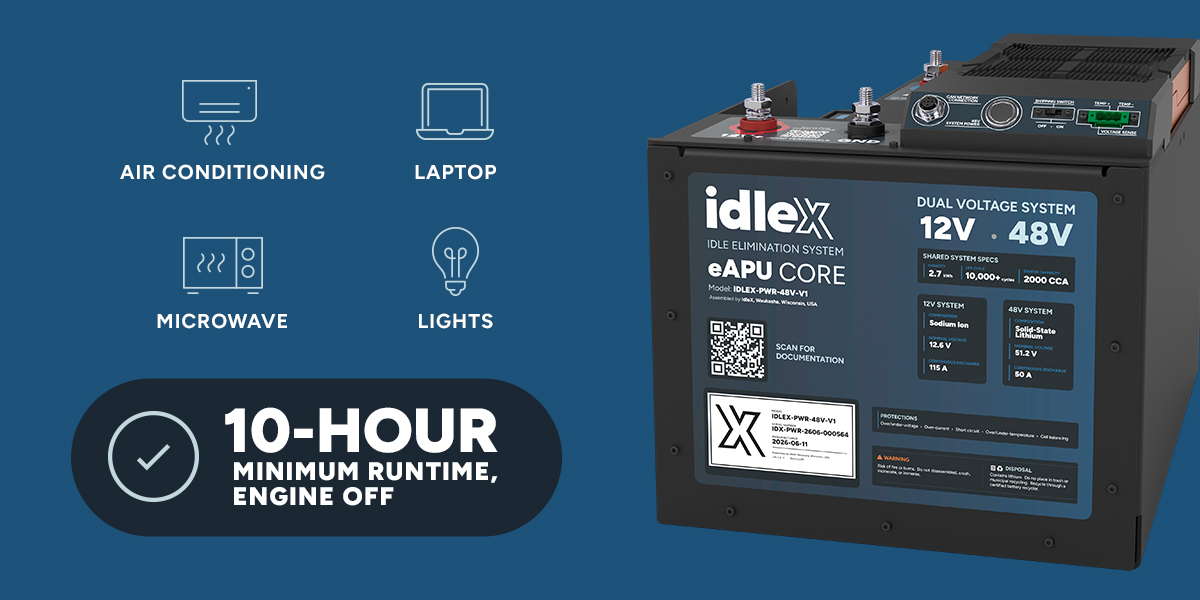
Then came a quieter revolution that changed the life of every driver on the road: the rise of the sleeper. What began as a cramped metal box evolved into a home away from home. Engineers learned to build comfort into motion, creating insulated, climate-controlled spaces that allowed drivers to rest safely between runs. The invention of the Auxiliary Power Unit, or APU, marked a turning point. It was not glamorous, but it was genius. It saved fuel, reduced wear, and gave drivers a better night’s sleep.

External pressures soon reshaped the trucks themselves. The oil crises of the 1970s and tightening environmental standards forced a shift from raw horsepower to efficiency. Aerodynamics replaced chrome as the new frontier. Rounded hoods, side fairings, and roof caps became the tools of the trade. Engines got smarter too, as electronic controls replaced mechanical governors, ushering in the era of computer-assisted precision.

Today’s rigs are as advanced as any modern vehicle. Electronic Logging Devices track hours and routes. Automated transmissions optimize every shift. Telematics systems feed data back to dispatchers in real time, monitoring everything from tire pressure to engine health. Safety systems use radar and cameras to help avoid collisions. Underneath it all, the truck has become a network on wheels, a far cry from its analog ancestors.

Yet through every generation, the purpose has remained the same: move freight safely, efficiently, and on time. The evolution of the semi-truck is more than a story of machines. It is a story of people solving real problems, one innovation at a time. From mechanical monsters to digital powerhouses, the legend continues to roll forward.

Every truck driver learns this lesson early: it is not just about horsepower, it is about timing. An 80,000-pound truck at highway speed holds enormous energy, but the true engine of safety is the human one. That is why the Hours of Service regulations exist, not as red tape but as a framework to protect drivers and everyone who shares the road.

These rules are the rhythm of the long haul. They dictate when a driver can move, when they must rest, and how they recover for the next trip. For years, drivers tracked them with paper logs and pencil lines. Today, the Electronic Logging Device has made those records automatic, connecting directly to the truck’s engine and logging every mile, minute, and movement. It is precision replacing guesswork.

The heart of Hours of Service lies in four simple limits:

  1. The 14-Hour Window: Once a driver clocks in after 10 consecutive hours off duty, the clock starts. Fourteen hours to get the job done, including driving, fueling, loading, and paperwork. When that window closes, the wheels stop.
  2. The 11-Hour Driving Limit: Within that window, only 11 hours can be spent driving. The rest is for everything else that keeps freight moving but keeps the driver safe.
  3. The 30-Minute Break: After eight hours of driving, every driver must pause for at least half an hour. It is not a suggestion; it is a safeguard. Fatigue is invisible until it is too late.
  4. The 60/70-Hour Rule: Over a week, total on-duty time cannot exceed 60 hours in seven days or 70 in eight, depending on the carrier’s schedule. A 34-hour reset clears the slate.

Beyond these basics are special provisions for split sleeper periods, adverse weather, and short-haul operations, but the principle never changes. Rest equals safety. A driver who sleeps well drives well, and that protects everyone.

For those outside the industry, the complexity of these rules can be hard to appreciate. For those inside it, they are second nature, a shared language of professionalism and pride. Following them is not just compliance; it is craftsmanship. It is how skilled drivers manage time, energy, and focus through thousands of miles and changing conditions.

Every load, every log, every line on the screen reflects something bigger: a promise to deliver safely. Understanding the Hours of Service is not just about knowing the law. It is about respecting the people who live by it, day after day, night after night, keeping the country running on schedule.