Posts

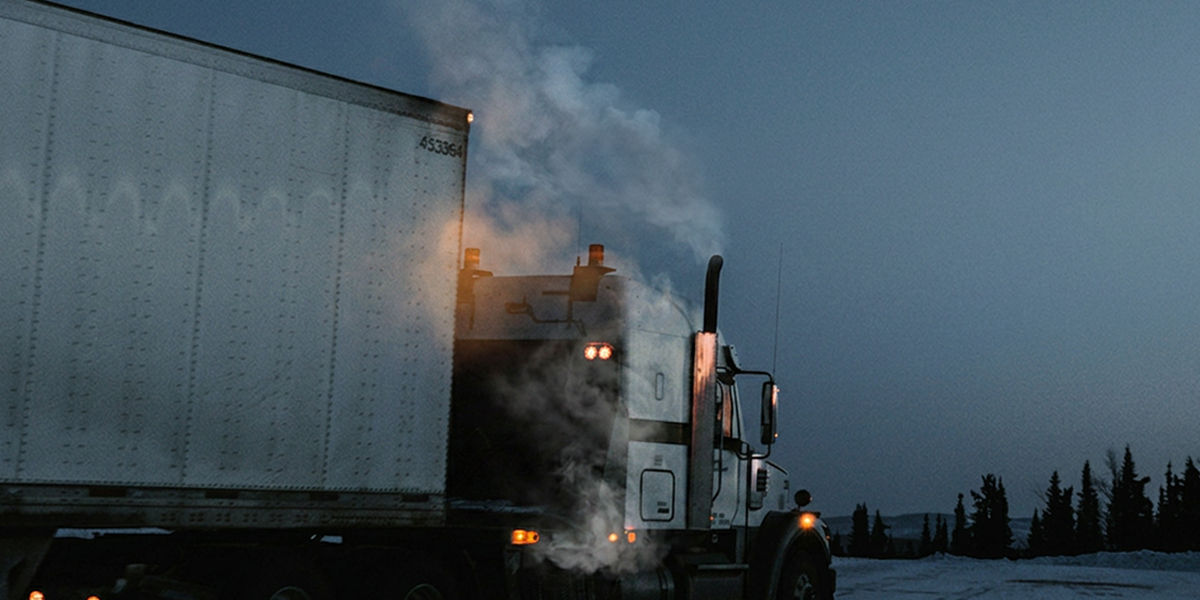
Semi Truck in Winter - Side view - steam/smoke

Choosing to rely on engine idling or basic limiters is costing fleets about $12,000 annually, PER TRUCK, yet only 25-40% of fleets have taken action to reduce idling. That’s serious cash burned while your truck isn’t on the road.

To break down what engine idling really costs you, we talked to our co-founder and CTO, Mike Deau. An electrical engineer who has built some of the most reliable and efficient eAPU systems in the world, Deau broke it down into six key categories:

While fuel prices change, the fact remains the same: No one wants to burn fuel when their trucks aren’t moving.
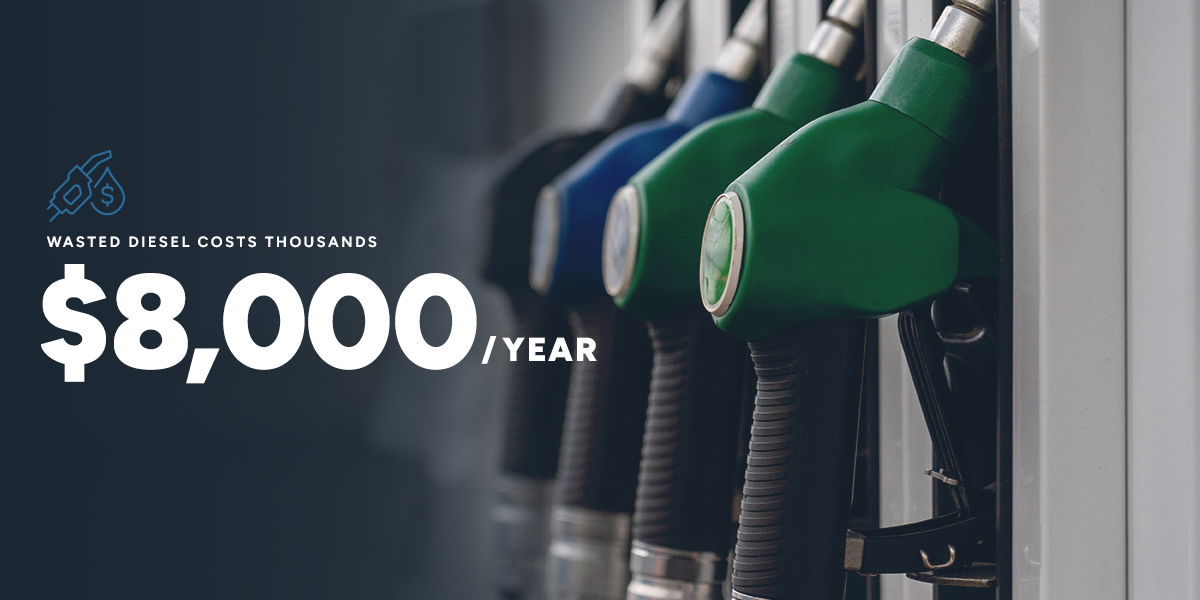
Wasted Diesel Costs Thousands - $8,000/year - Gas pumps

At $4.55 per gallon, letting a standard Class-8 semi-truck idle for 8 hours costs approximately $8,000 annually, per truck. This is the No. 1 financial drain associated with engine idling and it’s money that unnecessarily comes right off the bottom line.

*Most semis burn 0.9 gallons of diesel per hour while idling.

When the engine idles, it continues to produce emissions. That means your DEF fluid, used to turn harmful exhaust into safe air and water vapor, needs replaced or refilled more often.

Diesel Exhaust Fluid Degrades Faster - $1,000/year - Clouds/smoke

In most trucks, this equates to about $1,000 in annual costs.

If the engine’s running while idling, regular maintenance becomes more frequent.

Oil, filters and belt wear accelerate under these conditions, which means more maintenance costs and more downtime for your trucks.
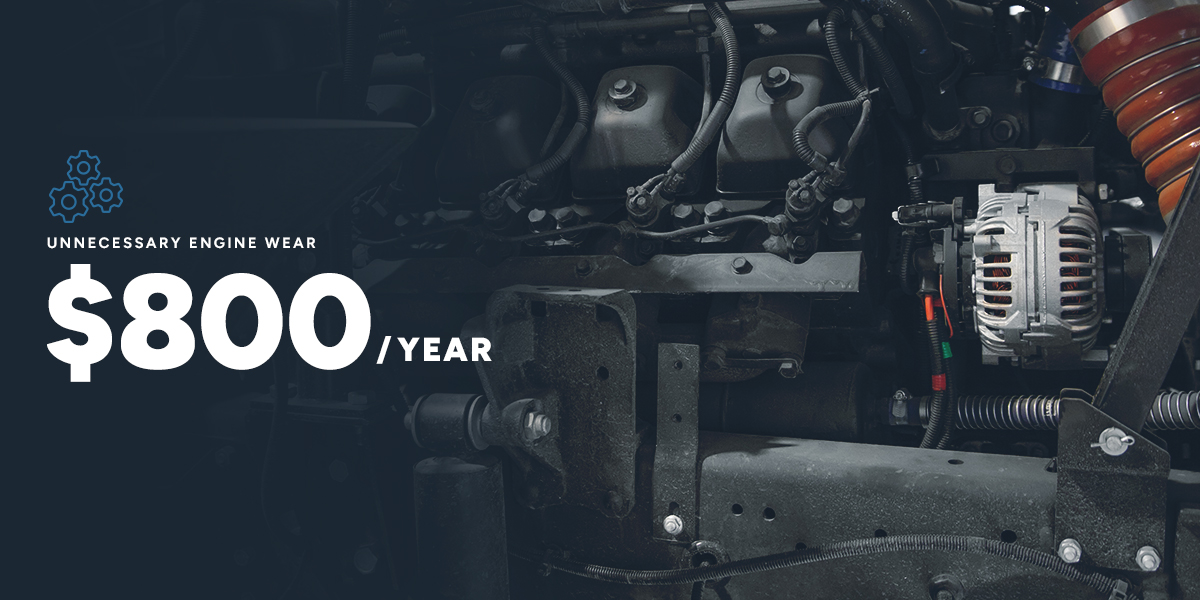
Unnecessary Engine Wear - $800/year - Motor & alternator

Each year, this costs fleets about $800 to manage.

The self-cleaning process that clears trapped soot and carbon from a truck’s diesel particulate filter (DPF), to no surprise, works more frequently when the engine has to idle all night.

DPF Regeneration Accelerates - $500/year - Shimmery oil or particulate on dark water

That results in more annual maintenance and filter costs of about $500. Eliminate the need to idle, eliminate the cost.

While not technically associated with engine idling, this is a high cost that’s eliminated when using an IdleX zero-idle eAPU system.
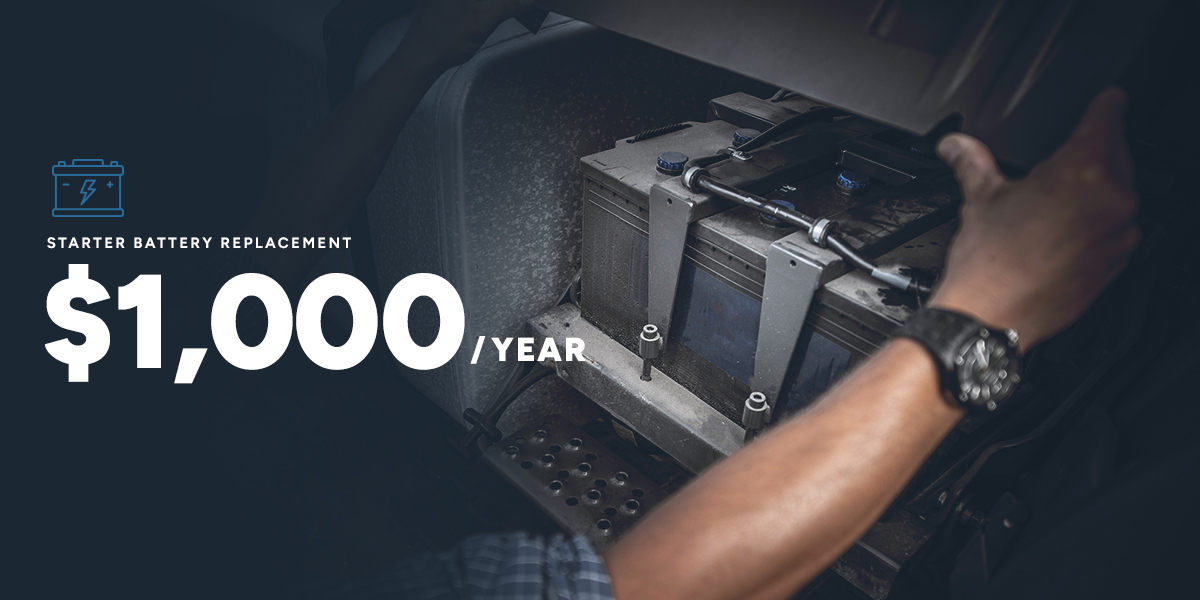
Starter battery replacement - $1,000/year - Trucking battery inside battery box

Because the IdleX system replaces starter and hotel batteries – and lasts 10,000+ cycles – the need to swap starter batteries is eliminated.  

Not having to replace your starter battery saves about $1,000 per truck.

While not universal, many diesel engine warranties are tied to engine hours, not mileage.

The result: You add costly hours to your truck’s engine, when it’s sitting still.

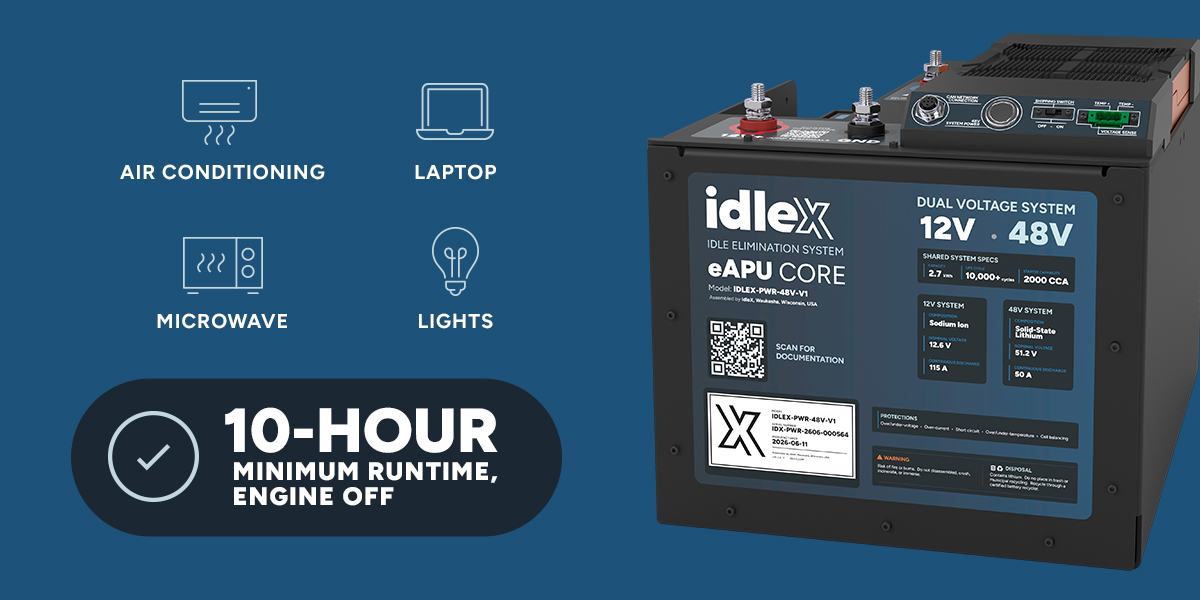
With the IdleX zero-idle eAPU system, idling isn’t reduced; it’s eliminated. With a 10-hour minimum runtime, it keeps your cab comfortable, and provides consistent, reliable power to run the A/C plus all electronics. Additionally, it replaces your starter battery, saving weight and maintenance costs.
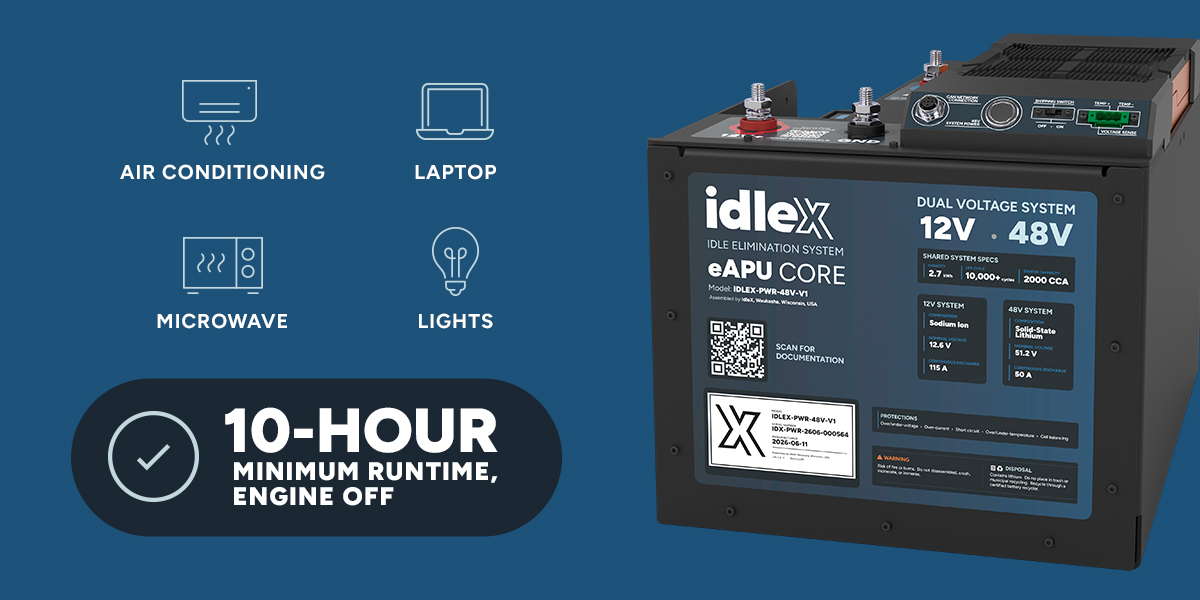
10-Hour Minimum runtime, engine off - idleX eAPU core - handle hotel loads

Outside of the initial purchase, an IdleX system only costs about $250 per year to operate. Broken down, it’s approximately $150 to generate energy from the alternator at 6 kWh/night and $100 in heater fuel. That’s a far cry from $12,000 when your truck relies on engine idling each night.
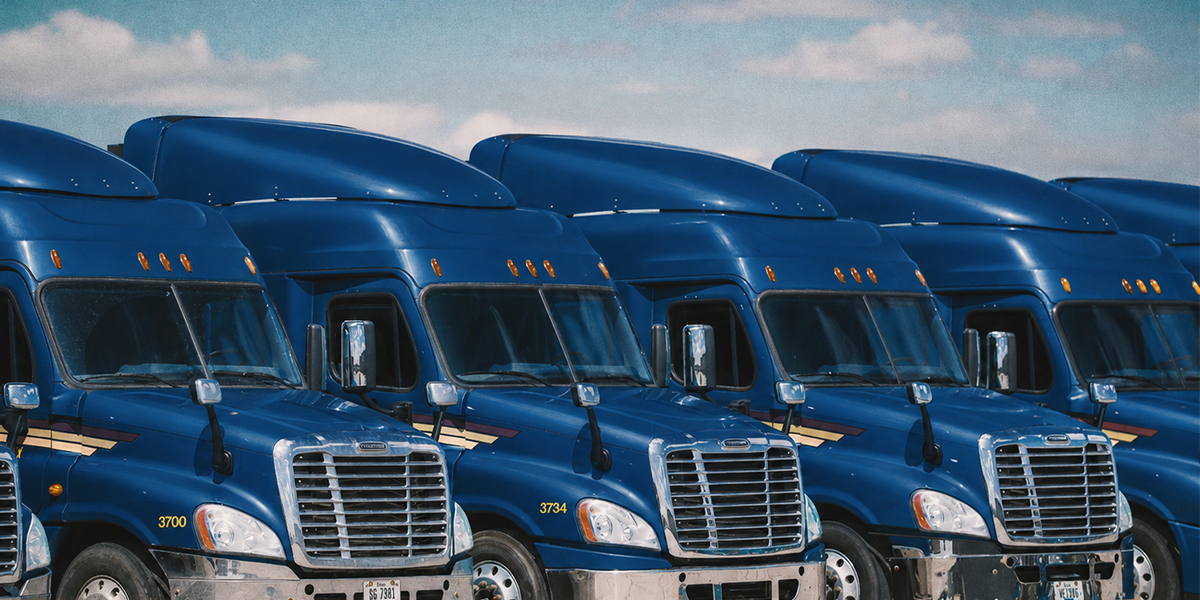
Fleet of semi trucks - parked in the daytime

Auxiliary power units have always required fleets to accept a trade. Either burn a little fuel to avoid burning a lot, or burn diesel – and money – all night with a diesel APU. We designed the IdleX eAPU system to eliminate that problem.

Fleet operators, understandably, have questions. Until now, no one had delivered an APU that provides consistent, reliable run times and eliminates idling.

First, the money question: Financed, an IdleX system provides an immediate return. The monthly cost is typically less than what the system saves in fuel and eliminated maintenance.

These are the five questions that come next:

We get it. You’ve been down this path with other APUs, diesel and battery both, and the result was lackluster.

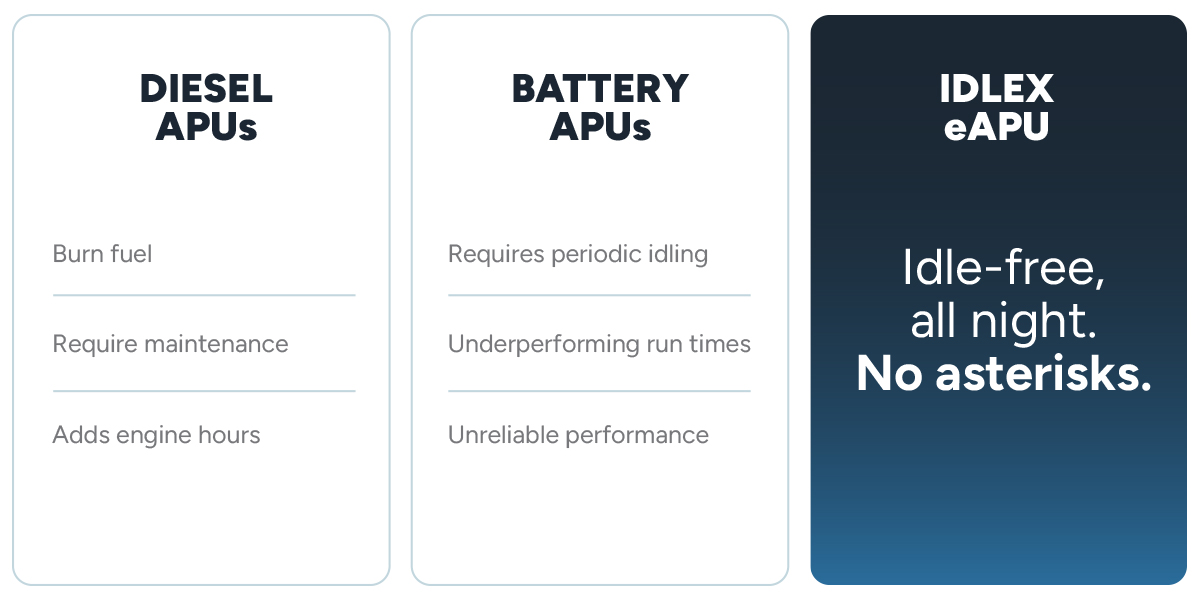
Diesel APUs require maintenance, burn fuel all night, and add hours to the truck. Battery APUs struggle to hold consistent power for a full mandated rest period, so the engine auto-starts. More idling, more fuel burned.

Diesel APU vs. Battery APU vs. IdleX eAPU chart. Highlights IdleX eAPU no-idle technology

The catch you’re bracing for is the asterisk. There isn’t one. Eliminating the need to idle while keeping everything in the cab running is a solvable engineering problem when you combine best-in-class electrical engineering with technology the trucking industry hasn’t used before.

At the core of the system is our power unit, built on industrial-grade 48V lithium batteries (more on those below) that deliver a minimum of 10 hours of idle-free runtime.

The core components, high-capacity lithium packs and intelligent 48V power management, have run for years in some of the most demanding off-grid conditions. IdleX is the first time they have been assembled into one system engineered for Class-8 trucks. Our fleet simulator lets you see how the system performs in your trucks, on your routes, in your climates.

It comes down to battery science.

The lead-acid batteries in nearly every Class-8 truck are designed to start an engine, not run appliances and electronics. They deliver a large burst of current, then recharge slowly while the truck runs.

Our 48V lithium batteries are built for the opposite job. They deliver a consistent, sustained stream of power to run an air conditioner, a laptop, a microwave, or anything else a driver keeps in the bunk.

IdleX eAPU Core - image of product and features. - Highlights 10-hour minimum runtime with engine off.

The battery technology in the IdleX system is engineered the same way as the packs in today’s top-performing electric vehicles. You get sustained, idle-free power overnight. When the engine fires up, the system recharges to 100% in six hours off any standard alternator. No shore power or alternator upgrade is needed.

Because that power is consistent and reliable, the system also replaces your starter batteries. The dual-voltage system delivers 2,000 CCA with push-button recovery. Fewer batteries to buy with minimal failure points.

Short answer: Yes.

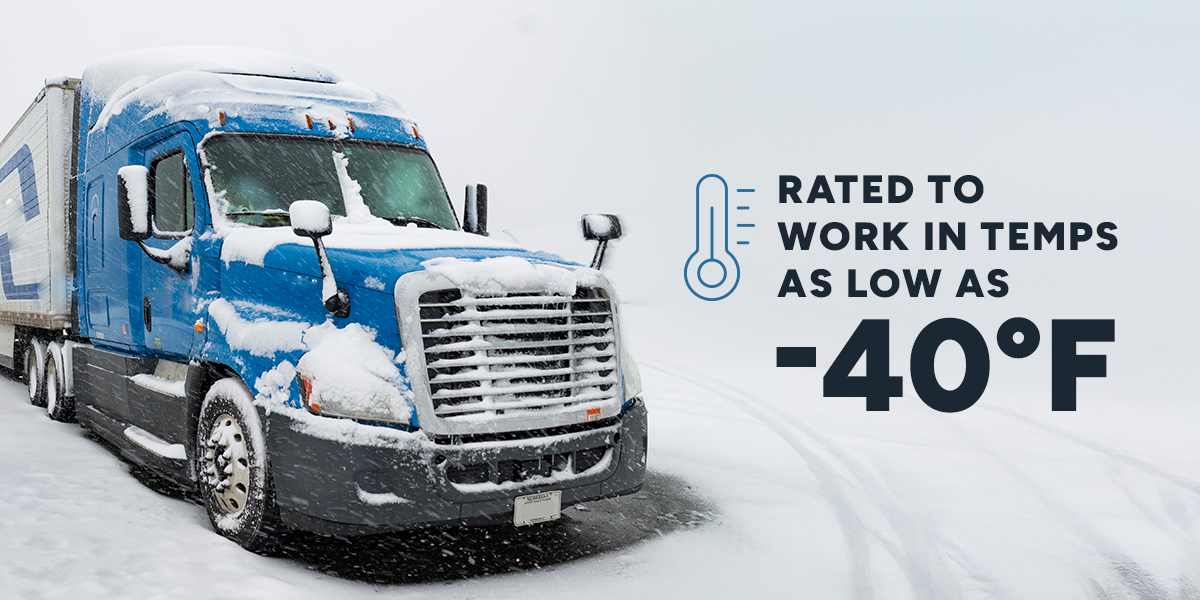
The system is rated to work in temps as low as -40°F. You’ll maintain consistent idle-free runtimes when the engine’s off and can rest easy knowing the truck’s going to start when it’s time to hit the road.

IdleX eAPU - Semi Truck driving in the snow - Rated to work in temps as low as -40 degrees fahrenheit.

Along with idle elimination, reliability is what the IdleX next-generation eAPU system is engineered for.

There’s no separate diesel engine. And you don’t have to deal with belts, oil, or filters. That removes the most common reasons an APU ends up in the shop. The power unit requires zero scheduled maintenance once it’s installed.

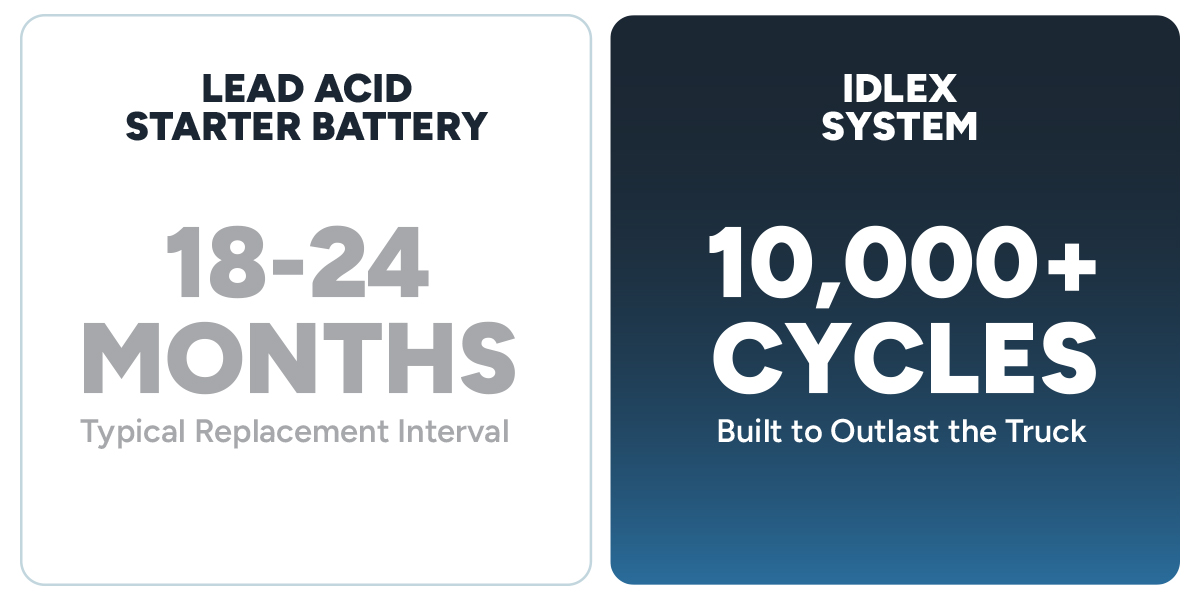
IdleX eAPU  vs. standard lead acid starter battery graphic - IdleX system offers 10,000 cycles and will outlast the truck

Lead-acid starter batteries typically get replaced every 18 to 24 months. The IdleX system is rated for 10,000+ cycles, built to outlast the truck it’s installed in.

When something does need attention, you’re not chasing it down. The system reports faults through the fleet portal, often before the driver notices, and the core system is backed by a 5-year parts and labor warranty.

From installation to daily operation, the system was designed with technicians and drivers in mind.

Install: your own technicians can do it, in your own shop. You don’t need to send trucks to a vendor or a specialty shop. It drops into the truck’s existing battery box, replacing the hotel and starter batteries, and it’s a one-day job. Many fleets can schedule the install during regular preventive maintenance, so it costs no additional downtime.

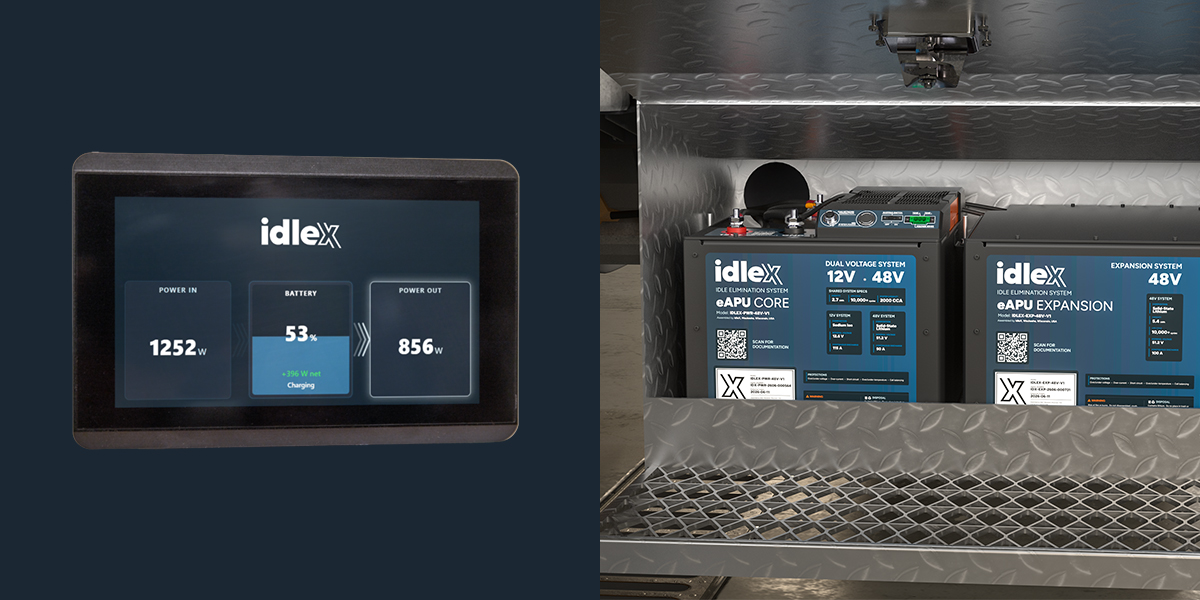
Use: an in-cab touchscreen shows power draw, battery level, and remaining runtime. Drivers can also set cab temperature from their phone before they climb in. They set the temp, check the charge, and go to sleep. No clunky menus or steep learning curve.

Side-by-side image - IdleX touchscreen control pannel on the left. IdleX core system and eAPU expansion battery installed in a truck on the right

Run your fleet’s numbers in the simulator, or talk to the engineers who built the system.

Every day, millions of trucks roll through the arteries of America, unseen by most and essential to all. They carry the food we eat, the medicine we need, the fuel that powers our homes, and the materials that build our cities. Take them off the road for a single day and the nation would feel it instantly. Gas stations would run dry, hospitals would ration supplies, and grocery shelves would empty. The economy does not just depend on trucking. It runs on it.

From the outside, it is easy to see only the final mile when a package appears at a doorstep or a shipment reaches a store. Inside the industry, everyone knows that is just the closing scene of a much longer story. Before a single pallet reaches its destination, trucks have already touched it several times, hauling raw materials to factories, components to assembly plants, and finished goods to distribution centers. Every link in that chain is tied together by wheels and diesel.

The scale of this system is staggering. Trucks move more than 70 percent of all freight in America by value, representing trillions of dollars in goods each year. Behind those numbers are people: millions of drivers, dispatchers, technicians, warehouse crews, and manufacturers. Each one plays a part in keeping the 80,000-pound heartbeat of the economy alive.

Modern logistics depends on precision. Just-in-time manufacturing means that the right part must arrive at the exact moment it is needed, whether it is a microchip in Michigan or produce in California. Construction, agriculture, energy, and retail all rely on trucking to connect supply with demand. The trucks themselves are as diverse as the cargo: flatbeds hauling steel beams, tankers moving fuel, reefers preserving food, and dry vans carrying nearly everything else. Each design solves a specific problem. Together, they form a single national machine that never truly stops.

Even in a digital world, every click and every order still leads to something physical that must move. That movement begins and ends with a truck and a driver behind the wheel. They are the foundation of commerce, of comfort, and of daily life. Without them, the country would come to a halt.